

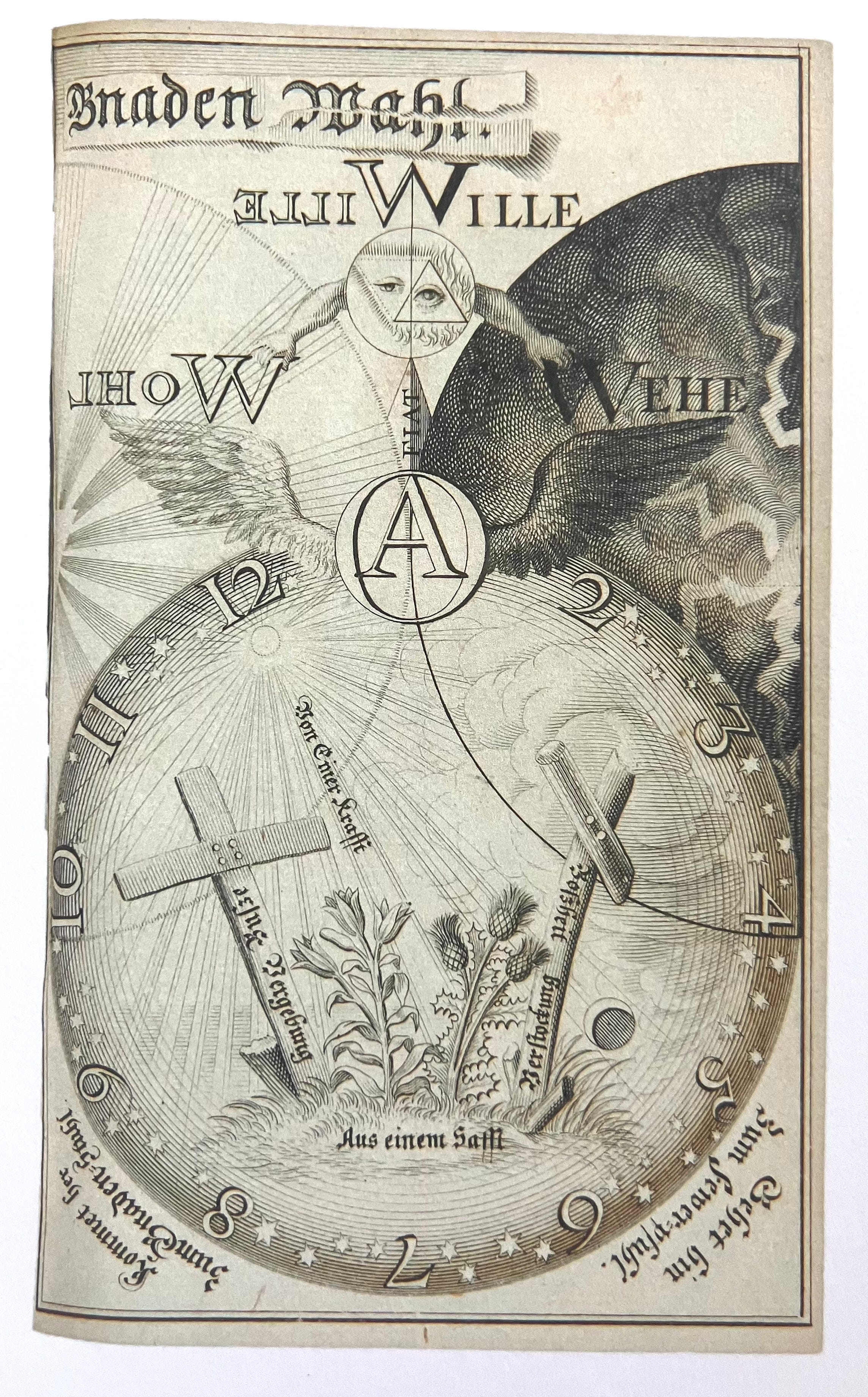
Theological debates about the Lutheran visionary and cobbler Jacob Boehme (1575-1624) (also spelled Böhme) can be tiresome. It is not surprising that the writer who Cyril O’Regan famously called “the most difficult read in the history of Western thought” can be read in different ways. On the one side are thinkers who join those who denounced Boehme in his own day as heretical, usually based on engagement of his early work like Aurora. On the other hand are those who engage his later, more mature work like Mysterium Magnum and conclude that those who exonerated this church-going Lutheran from heresy in his own day were not misguided. Which side is right?
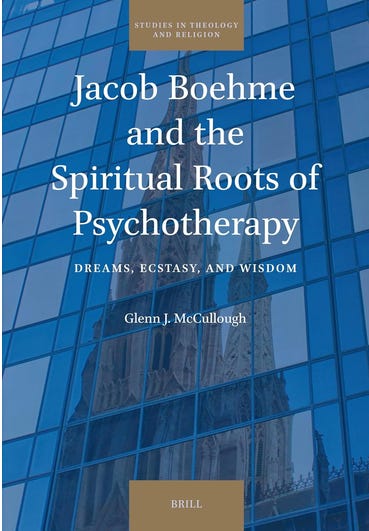
The latest Material Mysticism interview takes a different approach, not offering one more round of this ongoing, and sometimes tedious, theological debate, but showing instead what this great visionary can accomplish in a field beyond theology, namely in psychology. The interview shows not only how Boehme intervenes in that world, but how he in part generated it, and accordingly offers resources for that world’s present renewal. Our guide in this respect is the University of Toronto theologian and psychotherapist Glenn McCullough, whose recent book Jacob Boehme and the Spiritual Roots of Psychotherapy: Dreams, Ecstasy, and Wisdom, thoroughly substantiates that massive, perhaps even field-changing claim. But because the book is not terribly affordable (which is not the author’s fault), I hope the interview can help ensure that its powerful insights become more widely known.
Perhaps Jacob Boehme’s ability to wrest psychology from the stunted (though valuable) viewpoints of Freud and Jung might cause theologians to look on Boehme more sympathetically. For the so-called “God” in whom there is evil, who is cruelly working out his own psychological melodrama through the mechanics of creation, is not Boehme’s. “God Himself is the eternal, and only good, and the beginning of every good thing or will,” wrote Boehme, “neither is it possible that any evil at all can penetrate into Him, in as much as he is in himself, the one and only Good” (Election of Grace, chp. 1, par. 17I). No wonder Jacob Boehme’s psychological map has room for mystical silence and “Sabbath Rest Blessing” (much less so with Jung’s). No wonder Hegel (as those most competent to judge have determined) had to depart from Boehme, to “liberate” him from his so-called mystical barbarousness, to go where he did.
I tried to briefly gesture in these directions in my book Mother of the Lamb, but Glenn McCullough has done the real work, and unfurls what we might call the richly ecceslial Boehme far more clearly and thoroughly. I am fully aware, as McCullough is, that so-called “Behmenites” go in strange directions, even to the point of creating unsustainable cults. But if were to read all thinkers through the lens of their most manic and aggressive followers we would have to disregard Origen, Thomas Aquinas, Meister Eckhart, John Calvin, Karl Barth and Hans Urs von Balthasar as well.
So I’m no “Behmenite,” nor it seems to me is McCullough; but it is no exaggeration to say the the rich currents of Orthodox Sophiology on offer in Sergius Bulgakov or Pavel Florensky, to say nothing of the Anglican mysticism of William Law or Samuel Taylor Coleridge, would be impossible, or at least deeply impoverished, without Boehme. As Michael Martin once put it
Sophianic insight – though always informed by scripture, liturgy, and the traditions of the church – is arrived at experientially, mystically, artistically, and, as such, proves an uncomfortable fit in the structures of theological examination (140).
Perhaps reading Boehme while expecting him to operate like a systematic theologian is like putting Chimichurri sauce into the engine of a car. It’s the wrong liquid for that job, but is quite useful elsewhere. Maybe this is why readings of Boehme are most fruitful in fields beyond theology proper, fields like literature or art history; and psychology, we now know, is one of them.
At any rate, here is the interview, where Glenn McCullough as a thinker, scholar and therapist truly shines. As always you can subscribe to Material Mysticism by putting your email in here.
Well said. So used to seeing Boehme relentlessly bashed for inspiring Hegel and Schelling, but it always seemed odd to me, given his brilliant insights into Christian living and how he helped revive interest in Divine Sophia. I should spend more time with Mysterium Magnum!
Boehme had a profound influence on the early Lutheran Pietists (such as Spener and Francke), and the mere mention of his name among the Orthodox Lutherans of the time was enough to call the whole lot of conventicle-loving heartfelt bunch heretics. But like you have said, the story is much more complicated than that.